Thursday, May 8, 2008
Missing Post on Kowalke

Savarkar Reading
Missing Antigone Post
Breakfast at Tiffany's and Fashion

Wednesday, May 7, 2008
Michael Moore and Politics: Is he saying the truth?

Michael Moore's Films
Claim: Michael Moore's films Fahrenheit 9/11, Sicko, and have exposed people to the problems involved in politics, the health care industry, and gun control. I am going to explore whether his individual claims are true or not/ are found to be valid in each of his movies.
Evidence:
My primary source will be the films. My secondary sources will be critic's receptions and scholarly articles related to the movie. i will also use news stories/events of that time for historical background and to find what event each movie is primarily aiming at.
Purpose:
to find the legitimacy of Moore's claims in his films.
to find if he may have manipulated his claims to rile the public with anger or distrust towards the government
to find the effect of moore's films on the public.
Audience:
Students interested in modern politics and the problems with it
Humanities Core students looking to see a connection between the art of film and actions/movements.
anybody interested in american politics and anybody looking to find ways to improve it.
NOTE: i may choose only one of the films Moore has produced.
Tuesday, May 6, 2008
Savarkar's Point that Past is Prologue
Savarkar Response
White Noise by Don DeLillo (Consumerism Edited)
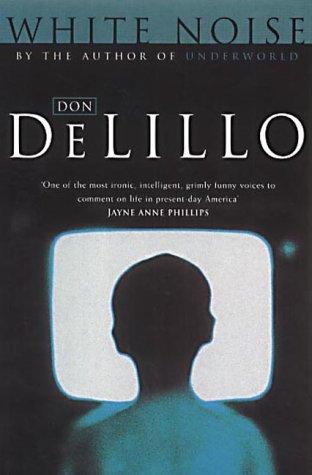
Claim: The novel White Noise by Don DeLillo is a revolutionary work that was clearly ahead of its time. My objective is to explore the prevalent themes in the novel including: excessive consumerism, a fear/fascination of death, and the universal obsession with technology.
Evidence: The primary evidence would come from the novel, but secondary sources including scholarly articles and contemporary reviews of the novel could also be useful. My research will also draw connections from other works that we've studied this quarter and throughout the year. Some historical background pinpointing the status of technology in the 1980s might also prove necessary.
Purpose: To closely analyze the significant themes within the novel and connect them to modern society and other novels and plays we have studied. Also, to illustrate the pervasiveness of consumerism and technology and to show the universality and modern relevance the novel still has to this day.
Savarkar
Oftentimes people mix up words or statements in order to benefit themselves. They believe that lying would be better than just coming out with the truth. In the case of the Rebellion of 1857, British writers or authority figures probably thought it better to taint the name of the Indian people, and not of their own. I guess I am trying to point out that by hiding your mistakes, you are only bringing about more negativity. With the British Empire's inability to even properly describe the events of the 1857 Rebellion, it would only lead to more and more debate about their rule in India. Those like Gandhi and V.D. Savarkar would not remain silenced, and in fact, would speak out more against the British and India's inability to attain freedom from them.
The Indian War of Independence
Swadharma & Swaraj
The Beatles and Civil Rights (edited)
Claim: For years the Beatles have been seen as revolutionary in their music and actions, and not only have they been popular in their time, but are popular today. I plan to explore the purpose of the Beatles. The Beatles were a symbol of peace ,that had the ability to persuade the public to advocate civil rights through their music.
Evidence: The primary focus will be based upon the songs themselves in both the lyrics themselves and the melody of the songs, specifically speaking for the moment: “Blackbird” (Significance of African American oppression), Revolution (revolutions and their consequences). Other evidence will include books that provide commentary on the Beatles, and their critique of the Beatle’s music. I will also provide historical background from various websites and books, explaining the situation of civil rights as well as interviewing people that lived through this movement.
Purpose: To show how powerful music can be, and the message it conveys to others. Music is simply one way of rebellion, that is non violent but powerful. Lastly to show how much people may rely on iconic figures for guidance, in this case civil rights.
Audience: Those interested in music history, the general public, people interested in the civil right’s moment.
Swadharma and Swaraj
The Volcano, Chapter 1: Swadharma and Swaraj deals with a very true and interesting concept, that of getting your facts straight and staying true to the source. Behind every event, there is an outcome and events leading up to the outcome. Like the Revolutionary War Swadharma and Swaraj speaks of, the outcome of the war is known, but the events leading up to the conclusion are often skewed, biased, or even untold. Therefore the cause of such a Revolution is not fully appreciated or understood unless the events leading up to the conclusion is clearly defined and known. Although some events may have been by accident, they were instrumental for the outcome. Oftentimes, many scenes in movies are created by accident and are unscripted. Oftentimes, the best acting takes place when you wing it or are spontaneous. Directors and filmmakers do not fail to acknowledge this accident, for it worked in their favor. If it did not work in their favor, they may simple redo the scene. This is not the case with a Revolution, you can not simply redo something, therefore all events leading up to the conclusion made an impact on the outcome. Therefore, all events leading up to the Revolution is a part of the Revolution, not just the final outcome.
Swadharma and Swaraj
The first line of the article reads, "It is a simple truism patent even to the uneducated that the most tiny house cannot be built without a foundation strong enough to support its weight". The article is about the real cause of the Revolution. They say it started with the rumor that the soldiers put "pig grease and fat" into their cartridges. It even states, "Did anyone even inquire to see if it was true?" This idea goes with everything in life. If something even on a smaller scale, such as a fight with a friend, starts because of a rumor, then there is no content or stability to base your assumptions on. The fight is therefore meaningless if the truth is not known. Relating to a larger scale, if a war was based on the annexation of Oudh and fat inserted cartridges, but those reasons might not be true, it means that an entire Revolution was based on false assumptions.
I really enjoyed reading this article because it relates to whats happening right now with the Iraq War. People question daily the reasons to why the war started and why we are still in it. To answer this question, we must find a stable foundation to base our assumptions on. We also must look for the root cause of the War, which might even be impossible.
Sunday, May 4, 2008
Jay-Z & the "Evils" [edited]
Claim: Jay-Z uses subliminal messages in his music and other aspects of his life and career to "corrupt"? his audience. He is heavily influenced by the Freemason society and the Illuminati. Besides his music, people have made claims that in his clothing line, Roc-a-Wear, there are designs and resemblances to the symbols of the Freemason society. This all leads to the idea of him being "evil." But I will try to prove that it is possibly just a coincidence or that people are basically making things up.
Evidence: One of my sources is the song "D'Evils" off of his first album, aka the best album he's ever made, Reasonable Doubt. =] And other songs like "Lucifer". There are other songs that can also be used to either support or counterargue my claim. I can also use material on the Freemason society itself and compare the two. Along with his music, there are also designs from his clothing line that can be used as evidence.
Purpose: To see if this all makes sense and to possibly prove that it is not true?? To show that Jay-Z is not a devil worshiper. There are some people who were Jay-Z fans before hearing about all this and after watching videos on youtube about his corruption, they have stopped listening to him. Then there are those who either don't believe in it or just don't let it affect what they think about his music and continue to listen to it.
Audience: Hip Hop and Jay-Z fans, listeners of good music. For people who don't know anything about Jay-Z or hip hop, it might be interesting for them to see how different things influence artists' music and how that is taken by fans.
Saturday, May 3, 2008
Hip Hop is Dead
Evidence: Nas' 2006 Album Hip Hop is Dead. Documentary by Russell Simmons titled "And You Don't Stop". The documentary features a very thorough timeline of the start of the Hip Hop movement, to the new sounds that are being made in the contemporary. I will also try to use lyrics and example from other musical artists in the Rap, Hip Hop, and R&B genres.
Purpose: The purpose of researching the phrase "Hip Hop is Dead" is to show how that phrase is completely false. It is also a way to show how Hip Hop in general has made such an impact on a young audience. Also, knowing that different generations think of Hip Hop in a different sense is really interesting as well. It is really cool to see how Hip Hop has evolved, and the lyrics that were used back in the day seems so much different than the lyrics society hears today.
Audience: The younger generation would definitely be more attuned to hearing the phrase Hip Hop is Dead. However, it is the older generation that began using this phrase. Therefore, it is a very wide range of audience age. Also, it should be aimed towards those who have a love of Hip Hop.
Friday, May 2, 2008
Freedom of Religion?
One of the grievances of the early settlers in America was that the Church/religion was heavily involved in the actions of the State/government; they wanted separation of these two entities. The quote from Veer Savarkar's book is exactly opposite of this separation; Savarkar states that the two- religion and government- must exist simultaneously or the situation is all together "despicable" or "powerless." Perhaps if the countries, states, provinces, cities, or any region under any type of government were composed of a single religion then religion could be a part of that government, but this is not the case. Our population is made up of so many religions with blatantly conflicting beliefs that if religion ruled government, there would be either no progress in the gridlock of so many ideas or there would be a law created by one religion that was unfair to another.
From the Author's Introduction of "Selections from The Indian War of Independence 1857," Savarkar states that it is absolutely unwise to try to do certain things now irrespective of special considerations, simply because they had been once acted in the past." I wonder if Savarkar would agree now that, because India and other places are now made up of various different religions, religion cannot play a role in government. It seems according to this previous statement about acting "irrespective of special considerations," that he would agree. But as I think more about it, (I am ASSUMING here) Veer Savarkar like Gandhi most likely believed that Dharma was the only way and so, I think he would say that swaraj and swadharma must still exist together for even another purpose: to enlighten those who do not believe.
Thursday, May 1, 2008
Week Six:Assignments
Reading: Read "Lightly Annotated Lists" (see links on blog)--prepare by ranking 1-5 the 5 websites on the sample, according to authority, currency, relevance, and comprehensiveness (+ "smarts"?); "Swadharma and Swaraj" in Humanities Course Reader (205-211); "Audience and Purpose" in Writer's Guide
Writing: Reading Response Blog (Savarkar, Vira, Vinyak); Begin Lightly Annotated Lists: bring in 3 sites you have found (in format of sample LAL); MUST have posted AB primary source blog (i.e. topic decided) by today.
Thursday May 8
Reading: Ranchod Vira Letter in Humanities Course Reader (212); "Electronic Research Methods" in Writer's Guide
Writing: Lightly Annotated Lists (inkl. 5 lists)
Wednesday, April 30, 2008
Invisible Children

Description and Purpose: The goal of this organization is to generate awareness about the events and people in
Evidence: The organization has a main website: http://www.invisiblechildren.com/home.php and they have created a movie about their first trip to
Claim: The claim of this movie is that there is a crisis going on outside our country and we need to become more aware of it. The children of
Audience: The audience is anyone. They have created websites and several different movies. The circumstances that are shown in the movie are really shocking. By creating this documentary, they did not have a specific audience in mind. They just wanted the word about
Tuesday, April 29, 2008
The Peace Symbol
 Gerald Holtom, a professional designer and artist and a graduate of the Royal College of Arts, first designed the Peace symbol in 1958 for the Direct Action Committee Against Nuclear War (CND). Though it is primarily known as the symbol for nuclear disarmament in Britain, in the US and around the world it is generally known as the peace symbol. A few people are said to have introduced the symbol to the US: Bayard Rustin, a close associate of Martin Luther King Jr., brought it over to the US, on his return from participating in the first Aldermaston March; Albert Bigelow, a pacifist protester, sailed his small boat outfitted with the CND banner into the vicinity of a nuclear test in 1958; and also Philip Altbach, a freshman at the University of Chicago, who traveled to England to meet with British peace groups as a delegate from the Student Peace Union (SPU) purchased a bag of the peace symbol buttons while he was in England and brought them back to Chicago where he convinced SPU to reprint the button and adopt it as its symbol. Nevertheless, it became widely used in civil rights marches, it appeared on anti-Vietnam War demonstrations, and was even seen painted in protest on American GI helmets. It appeared on the walls of Prague when the Soviet tanks invaded in 1968, on the Berlin Wall, in Sarajevo and Belgrade, on the graves of the victims of military dictators from the Greek Colonels to the Argentinean junta, and most recently in East Timor. The symbol, initially created to protest violence, remains for the same purpose; it continues to represent peace in this world and is directed and worn for anyone who will look or listen to its simple message.
Jay-Z & the "Evils"
Claim: Jay-Z uses subliminal messages in his music and other aspects of his life and career to "corrupt"? his audience. He is heavily influenced by the Freemason society and the Illuminati.
Evidence: One of my sources is the song "D'Evils" off of his first album, aka the best album he's ever made, Reasonable Doubt. =] And other songs like "Lucifer". I can also use material on the Freemason society itself and compare the two.
Purpose: To see if this all makes sense and to possibly prove that it is not true?? To show that Jay-Z is not a devil worshiper =]
Audience: Hip Hop and Jay-Z fans, listeners of good music.
Research Post: Hannah Hoch

Okay so for now I am quite interested in researching Hannah Hoch's involvement with photography as well as how she used her art as a means of advocating homosexuality. It may be a fleeting interest but regardless.....
CLAIM: Hannah Hoch's art aided in a revolutionary art movement (Dadaism) and also simultaneously can be viewed as advocating feminism and providing the stepping stones for the acceptance of homosexuality.
EVIDENCE: "Tamar" a photomontage that illustrates the idea of judging on the basis on gender.


PURPOSE: This photomontage circles around the issue of gender and also like her other works she touches base on the issues of homosexuality, feminism, and a lot with women's role in society and how they are viewed.
AUDIENCE: Hoch's audience would be first the german people as this is where a majority of her work was created and so viewed, but on a grandeur scale it appeals to the mass of woman and men as it empowers women and enlightens men of the injustices of the female gender.
http://www.yellowbellywebdesign.com/hoch/gallery.html
Research Blog
Claim: Chain stores, such as Wal-Mart, detail the homogeneity of the American market and the difficulty that "mom and pop" stores face when trying to survive.
Evidence: Marketing campaigns of these companies that divulge the number of consumers (200 million, apparently) the effect these customers can have. Also, I could include background about the rise in franchises in recent history. Furthermore, statistics and other relevant information should speak for itself.
Purpose: The purpose is to showcase the prevalence capitalism in our modern society and how the CEOs of large companies reap the benefits of a populace willing to settle with little diversity in their consumption.
Audience: The audience could include a very wide range of people, but this research paper would probably appeal to the American consumer; also, it would appeal to those who are anti-consumerism.
The Beatles and Civil Rights
1. Claims:
- Beatles songs inspired a generation of civil rights activists to believe and fight for their cause.
- These songs not only inspired a generation, but also gave soldiers another type of response.
2. Evidence:
- The primary focus will be based upon the songs themselves in both the lyrics themselves and the melody of the songs, specifically speaking for the moment: “Blackbird” (Significance of African American oppression), Revolution (revolutions and their consequences)
- Other evidence could be from people that were activists in the war that are still living.
- Historical background in order to give the proper context of the situation.
3. Purpose:
- Show the power of music (as cheesy as it sounds).
- There are many other forms of rebellion other than physical violence.
- Importance of some pop culture figures, and the role that they can play on society
4. Audience:
- Those interested in music history, the general public, people interested in the civil right’s moment.